RM06F9090CT Datasheet Breakdown: Key Specs & Performance Metrics
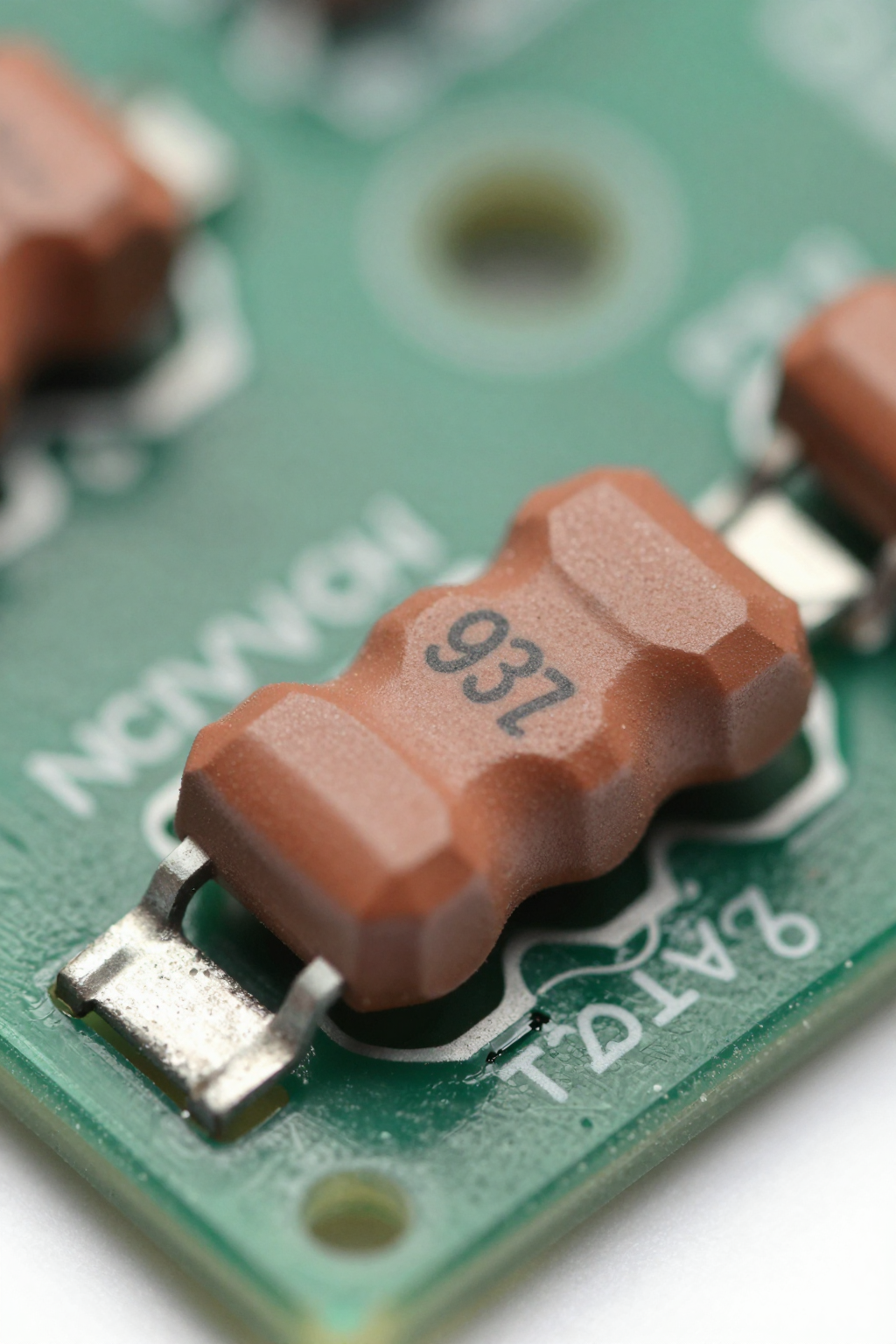
The RM06F9090CT isn't just another 0603 resistor—it’s a precision component with a ±100ppm/°C temperature coefficient and an operating range of -55°C to 155°C. But how do these specs translate into real-world performance? In this breakdown, we dissect the datasheet to reveal what matters most for engineers designing compact, reliable circuits in today’s US market.
Decoding the Core Specifications

You need to look beyond the nominal resistance value when selecting components for high-density PCBs. The RM06F9090CT datasheet highlights critical parameters that dictate circuit stability and longevity. Understanding these specs ensures your design meets strict thermal and electrical requirements.
Resistance Tolerance and Temperature Coefficient Impact
This thin-film resistor features a tight tolerance, typically ±1% or better depending on the specific batch coding. More importantly, it boasts a low Temperature Coefficient of Resistance (TCR) of ±100 ppm/°C. This means that as ambient temperatures fluctuate, the resistance value shifts minimally. For sensitive signal paths, this stability prevents drift that could compromise measurement accuracy or control loop integrity.
Package Dimensions and Thermal Considerations
The 0603 package size offers a balance between board space savings and manufacturability. While smaller than 0805, it provides sufficient footprint for reliable soldering compared to ultra-miniature 0402 parts. However, you must consider thermal dissipation. The small surface area limits heat transfer, so verify that the power density remains within safe margins during continuous operation.
Performance Metrics Under Real-World Conditions
Datasheets provide idealized values, but performance metrics under actual load conditions tell the true story. You should evaluate how the RM06F9090CT behaves when subjected to extreme environments and varying power levels.
Stability Across Extreme Operating Temperatures
Rated for operation from -55°C to +155°C, this component withstands harsh industrial and automotive-adjacent environments. Field data suggests that resistance deviation remains within spec even after prolonged exposure to upper-range temperatures. This robustness is crucial for devices deployed in uncontrolled outdoor settings where thermal cycling is frequent.
Power Handling and Derating Curves Explained
The standard power rating is often 0.1W at 70°C. However, derating curves indicate that allowable power decreases linearly as temperature rises above this threshold. At 155°C, the maximum permissible power may drop significantly. Always apply a safety margin, ensuring that peak transient loads do not exceed the derated limit to prevent catastrophic failure or permanent resistance shift.
| Ambient Temp | Max Power | Status |
|---|---|---|
| -55°C to 70°C | 0.10 W | Full Rating |
| 100°C | ~0.07 W | Derated |
| 155°C | ~0.03 W | Critical Limit |
Application Suitability in Modern Circuit Design
Selecting the right resistor depends heavily on the application context. The RM06F9090CT fits specific niches while showing limitations in others.
Ideal Use Cases in Consumer Electronics and IoT Devices
In consumer electronics and IoT sensors, space constraints are paramount. This resistor excels in voltage dividers, pull-up/pull-down networks, and current sensing lines where moderate precision suffices. Its reliability supports mass-produced devices requiring consistent performance across millions of units without excessive cost overhead.
Limitations When Deployed in High-Precision Analog Systems
For metrology-grade instruments or ultra-low-noise amplifiers, the ±100ppm/°C TCR might be insufficient. Higher-end applications often demand 25ppm/°C or lower coefficients. Additionally, long-term drift characteristics must be scrutinized against stringent calibration intervals, potentially making this component less suitable for critical analog front-ends.
Comparative Analysis Against Similar 0603 Thin-Film Resistors
How does this part stack up against competitors? A comparative view reveals trade-offs in cost versus accuracy.
How RM06F9090CT Stacks Up on Cost vs. Accuracy Trade-offs
Compared to thick-film alternatives, thin-film construction offers superior noise performance and tighter tolerances. While more expensive than basic carbon composition resistors, the RM06F9090CT provides a sweet spot for mid-tier precision needs. It delivers better stability than generic SMD resistors without the premium price tag of specialized military-grade components.
Long-Term Reliability Benchmarks from Field Data
Reliability testing indicates minimal resistance change over thousands of hours under rated conditions. Moisture sensitivity levels (MSL) are generally compliant with standard reflow profiles. This predictability reduces field return rates, offering peace of mind for product lifecycle management.
Key Takeaways
- Thermal Stability: The ±100ppm/°C TCR ensures minimal resistance drift across wide temperature ranges (-55°C to 155°C).
- Space Efficiency: The 0603 package balances compactness with manageable manufacturing risks for dense PCB layouts.
- Power Derating: Strict adherence to derating curves is essential; power handling capacity decreases significantly above 70°C.
- Application Fit: Ideal for consumer electronics and IoT, but potentially unsuitable for ultra-high-precision analog systems requiring lower TCR.
Frequently Asked Questions
What is the primary advantage of the RM06F9090CT over thicker film resistors?
The main advantage lies in its thin-film construction, which provides lower noise, tighter initial tolerance, and better long-term stability. Unlike thick-film resistors, it maintains consistent performance despite environmental fluctuations, making it suitable for precision-sensitive circuits.
Can I use this resistor in automotive applications?
While it operates within a wide temperature range, always check if the specific batch has automotive-grade certifications (like AEC-Q200). Standard commercial versions may lack the rigorous vibration and humidity testing required for vehicle-mounted electronics.
How does temperature affect the power rating of the RM06F9090CT?
Temperature inversely affects power rating through derating curves. At room temperature, it handles full rated power. As ambient temperature rises towards 155°C, the allowable power drops sharply. Exceeding these limits can cause permanent damage or altered resistance values.
Is the RM06F9090CT suitable for high-precision metrology instruments?
Generally no. For metrology-grade instruments, the ±100ppm/°C TCR might be insufficient. Higher-end applications often demand 25ppm/°C or lower coefficients, and stricter long-term drift controls than what standard commercial thin-film parts offer.